
You're Not Losing Bookings Because of Your Price. You're Losing Them Because of This.
You've done everything right. You invested in the photography.
You optimized your listing.
You're responding to guests within the hour.
You've got a five-star rating streak you're genuinely proud of.
And still...you're sitting there, staring at gaps in your calendar, wondering if you need to drop your rates again just to get someone to click "book."
So you do it.
You lower the price.
And it works, someone books.
But now you're doing the math at the end of the month and realizing you barely broke even.
The fees came out, the cleaning crew came out, the supplies came out, and what's left feels like a hollow version of what you thought this business was going to look like.
Here's the thing nobody wants to say out loud: your price isn't the problem.
It never was.
The problem is something deeper, and until you see it clearly, you'll keep competing on price, keep feeling squeezed, and keep wondering why your fully booked calendar doesn't translate into the profitability and freedom you got into this for.
The problem I've been seeing with short-term rental owners is that they've bought into a dangerous myth: that the way to fill your calendar is to be the best price in the market.
So they watch their competitors, they monitor Airbnb's suggested pricing, and they shave off a few dollars here, a few there, telling themselves it's temporary, just until they build momentum.
But this belief keeps STR owners trapped in a cycle that has nothing to do with their property's actual value.
Because the moment you compete on price, you've removed yourself from an entirely different, and far more powerful conversation.
You've stopped being a destination and started being a commodity.
And commodities get purchased by whoever's cheapest, not whoever's best.

It's like opening a boutique coffee shop and trying to compete with a gas station by dropping your prices.
Sure, you might sell more cups.
But you've also told your customers, and yourself, exactly what you think your coffee is worth.
The guests you're chasing with discounts are not the guests who will ever be loyal to you.
And loyalty is the only thing that ever sets a vacation rental apart from the thousands of identical listings surrounding it.
Here's a story I have to share with you on this.
I want to tell you about Michelle (not her real name, but a true example), a short-term rental owner with three properties who came to me exhausted and convinced her market had simply become "too competitive."
Michelle had been hosting for four years.
Her properties were beautiful, she had a knack for interior design and took real pride in the experience she offered.
Guests left glowing reviews.
Her response time was impeccable.
She'd hired a cleaning crew she trusted.
By every visible metric, Michelle was doing everything right.
Despite all of that, Michelle's profits had been quietly eroding for over a year.
She'd watch a competitor list at a lower nightly rate, panic, and follow suit.
Then that competitor would drop again.
Then Michelle would.
It had become a race, and somewhere along the way, she'd stopped asking whether she was actually winning it.
The worst part?
Michelle had a solid base of past guests who had loved their stays.
People who had left five-star reviews.
People who had told her, "We'll be back."
But there was no system to follow up with them.
No way to let them know about an opening before it hit Airbnb.
No email waiting in their inbox reminding them that summer was coming and her place was exactly where they'd talked about returning to.
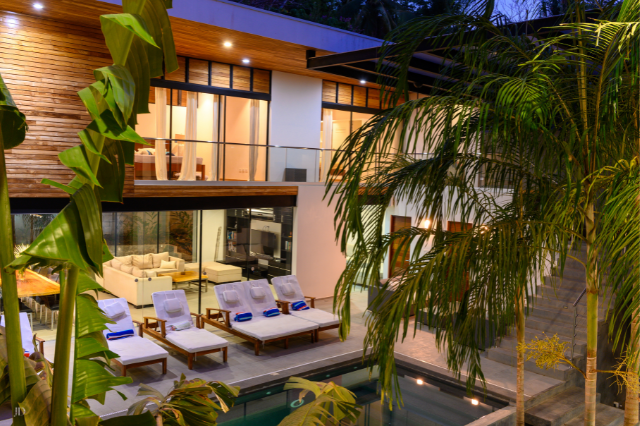
Michelle felt trapped, like the only lever she had was her price.
And every time she pulled it, she gave away a little more of her margin, a little more of her energy, and a little more of the dream that had led her to build this business in the first place.
She didn't have a pricing problem.
She had a systems and relationship building problem.
And she didn't know it yet.
As a content and marketing strategist who helps vacation rental owners build direct booking systems that reduce OTA dependency, this is something I see all the time.
The owners who are most frustrated with their profitability aren't the ones with bad properties.
They're the ones who have been playing the platform's game so long they've forgotten they're allowed to build their own.
When every booking starts and ends with Airbnb, Airbnb owns the relationship.
They hold the guest's contact information, they set the fee structure, and they determine whether your property shows up in search results tomorrow.
Your guest could have the most transformative stay of their year at your property, and then walk right back to Airbnb to book their next trip, with no idea how to reach you directly.
That's not a pricing problem.
That's a systems problem.
I worked with Michelle to shift her focus from chasing the next stranger to nurturing the guests who already loved her.
We built a simple system for capturing guest contact information during their stay
Something as straightforward as a QR code for Wi-Fi access that simultaneously added them to her email list.
We set up a short post-stay email sequence.
We created a way for her to reach out to past guests with availability before she ever touched her pricing.
The transformation was remarkable.
Within two booking cycles, Michelle had filled a previously dreaded shoulder-season week entirely through her email list, at full price.
Guests who had stayed the prior summer replied within hours.
She hadn't dropped her rate by a single dollar.

More importantly, Michelle stopped watching her competitors' pricing every morning.
She had something they didn't: a direct line to people who had already chosen her once and were primed to choose her again.
Her marketing started working for her around the clock, even when she was sleeping — because it was built on relationships, not algorithms.
She also regained something harder to quantify: her confidence in the value of what she offered.
When you stop competing on price, you're forced to compete on experience.
And that's a game Michelle, and every thoughtful, hospitality-driven host, is absolutely built to win.
To get some perspectives on what others were experiencing with this shift, from price-focused to experience-focused hosting, I reached out to some connections in my network.
I asked some of them: "When you think about the guests who have stayed with you more than once, what do you think brought them back?"
And others: "What does 'a great stay' mean to you as a host — and how do you know when you've delivered it?"
Here's what they had to say:
Ryan & Marty Alexander — Southern Collective
"I think most people return based on two things: experience and consistency. We focus a lot on cleanliness, comfort, good communication, and making the space feel warm and inviting. When guests know what to expect and remember a great experience, they feel confident to book with us again. We believe repeat guests come back for the experience just as much as the property itself. The small details matter as much if not more than big 'wow' features — comfortable beds, a cozy atmosphere, thoughtful touches, and just making people feel welcome without overcomplicating things."
Carlie Humphrey — Carlie Humphrey Properties
"We work to ensure our rentals feel like an extension of your own home. We try to keep the kitchen well stocked, beds comfortable and house sparkling clean. We have many repeat guests tell us they come back because of it. Also, you can't beat the location — no better spot than Northern Michigan in the summer!"
This perspective was echoed by Shalom Kaiser, whose Colorado-based management company has hosted tens of thousands of guests across 100+ properties:
"When we think about guests who have stayed with us more than once, we believe they come back because of the trust and ease they feel throughout the entire experience. From well cared for homes to thoughtful communication and a consistent level of comfort, returning guests know they can expect a stay that feels seamless, relaxing, and reliable."
And then there was this response — one that stopped me completely when I read it.
Because it captures something that no pricing algorithm will ever be able to manufacture.
Será at Sandy Ridge — Wardensville, WV
"A great stay, to us, is when guests feel genuinely more connected by the time they leave: to nature, to the people they came with, and to themselves. It's the feeling of slowing down without trying too hard. Coffee on the deck listening to the birds chirp and the wind rustle through the trees. Long conversations by the fire — inside or outside. A sauna or a soak at sunset. And falling asleep with a framed view of stars after a day that felt simple in the best possible way.
We know we've achieved it when guests treat Será as their place for a moment in time. When they notice the small details. When they linger a little longer before checkout. When they tell us they slept better here, felt more present here, or can't wait to come back. The best compliment we receive is when guests say they didn't want to leave."
These conversations reveal a pattern that every single one of these hosts shares: not one of them mentioned price. Not once. What they mentioned was consistency, warmth, trust, communication, detail, and connection. The experiences they described — a well-stocked kitchen, beds that actually feel good, coffee by a window with a view worth lingering over — are not expensive to create. But they are deeply, sustainably differentiated.
The recurring theme across each of these perspectives is that the guest relationship doesn't end at checkout. It lives there. Repeat guests return because something in your property made them feel something — and they trust that you'll deliver it again. That trust is built stay by stay. And it is the single most valuable asset a vacation rental owner can develop.
Steph & Ryan - Wander North Stays
We have guests who enjoy heartwood & Pinecrest for special elopements, honeymoons, birthdays or just a chance to reconnect. They come back to enjoy and reconnect to relax together and get out in the beautiful area
This led me to reflect on several important questions worth sitting with:
QUESTION #1: How much of your current marketing energy is being spent attracting strangers rather than nurturing the guests who already trust you?
It's important because the guests who have already stayed with you are not just past customers, they are pre-qualified, warm leads who have already experienced your property, loved it enough to leave a review, and told their friends about it.
Without a system to maintain that relationship, every single one of them walks back to Airbnb to book their next trip, with no memory of how to reach you directly.
The cost of that isn't just one lost booking. It's years of repeat stays, referrals, and word-of-mouth that simply never happens.
It's kind of like spending all your time and money trying to find new friends when you already have a group of wonderful people who genuinely like you, and you just stopped calling them back.
The relationship was warm.
The trust was real.
But without the follow-through, it fades.
And the next time they want to go somewhere beautiful, they open Airbnb instead of your inbox.
QUESTION #2: If your pricing disappeared from the equation entirely, what would make a guest choose you over the property next door?
It's important because the answer to this question is your actual marketing strategy, and most STR owners have never been asked to articulate it.
If you can't answer it clearly, neither can your potential guests.
Your listing, your social media, your entire content presence should be communicating this answer at every touchpoint.
And if it's not, if the only thing setting you apart is a competitive nightly rate, then you have built your business on the most fragile foundation there is.
It's kind of like two restaurants on the same block.
One competes on price.
One competes on the way it makes you feel when you walk through the door, the smell, the lighting, the fact that the owner remembers your name.
The first one gets traffic.
The second one gets loyalty. And loyalty is the only thing in this industry that compounds over time.
QUESTION #3: How vulnerable is your business if Airbnb changes its algorithm, increases its fees, or a new competitor moves into your market tomorrow?
It's important because OTA dependency is not a stable business strategy, it's a borrowed one.
Every booking that comes through Airbnb is a booking where Airbnb owns the guest relationship, sets the terms, and takes a significant cut.
The moment the platform changes, your revenue changes with it.
But every guest whose email address lives in your database, who has booked direct with you before, who opens your emails because they genuinely want to hear from you, that relationship belongs to you.
It is not subject to algorithm changes, fee increases, or new competition.
It's kind of like building your home on rented land.
The house might be beautiful.
The work you've put into it might be extraordinary.
But if the landlord changes the rules, raises the rent, or sells the property, you have no recourse. An email list is land you own.
A direct booking relationship is equity.
And unlike a nightly rate, equity compounds.
These questions reveal the fundamental limitation of price-based competition: it requires you to constantly react to external forces you don't control. Your competitor drops their rate.
Airbnb adjusts the algorithm.
The market softens.
And every time one of those things happens, you scramble.
You discount.
You hope.
The hosts in this article aren't immune to market fluctuations.
But they've built something beneath their business that price-focused competitors don't have: real relationships with real guests who trust them.
That trust is what fills a calendar before it ever needs discounting.
That trust is what generates a five-star review before checkout.
That trust is what makes a guest pass by three cheaper options and book the one that made them feel something last time.
The truth is, you don't have to be the cheapest option in your market. You have to be the most remembered one.
And that's not a pricing strategy.
That's a relationship strategy.
By shifting your focus from competing on price to building a guest list that you own and nurture, you create a booking engine that runs on loyalty rather than luck, and that's a fundamentally different business than the one you're in right now.
Start building a system that creates more profitable bookings through owned relationships (not rented attention),grab my FREE →Profitable STR Playbook
A free 5-day course for STR owners who want to stand out and fill their calendar, without competing on price!
The first step is simpler than you think, and it starts with what happens in the 48 hours after your next guest checks out.
OR, if you're ready to build this out now for your STR business, book your FREE Profitable Bookings Review Here
